Cocoa Beans: A Standardised Commodity with a Real Benchmark
A public futures benchmark, a mature ICCO grading system, standardised packing — this is why cocoa beans suit digital trading.
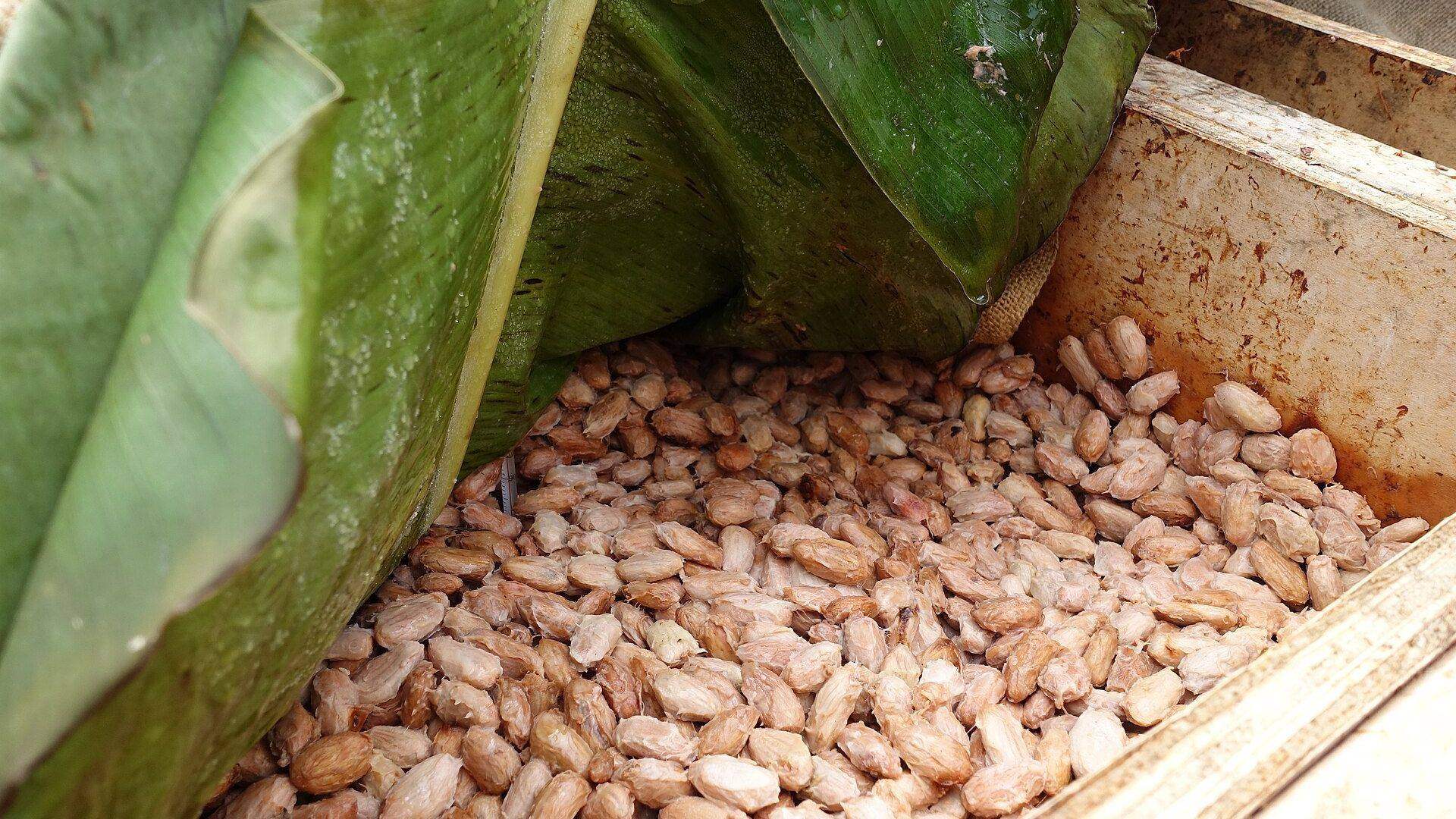
Cocoa beans are among the most heavily traded soft commodities. What makes them distinctive is that they have both a public price benchmark and a defined quality standard. These are the prerequisites for digital trading — without a benchmark there is no reference price, and without a quality standard buyers and sellers argue endlessly over what a lot is worth.
The price benchmark comes from ICE US Cocoa (code CC), quoted in USD per tonne. All physical prices are set as this benchmark plus a differential reflecting origin, grade and market tightness. On 21 October 2026, the CC front month traded at USD 5,839/tonne.
The quality standard comes from the International Cocoa Organization (ICCO) grading system. Grade I requires mouldy beans ≤3%, slaty beans ≤3%, total defects ≤3%, moisture ≤7.5% and no more than 100 beans per 100g. Those three measures — mould, moisture and bean size — largely determine a lot’s use and price.
On variety, Forastero accounts for about 80% of world output: disease-resistant and high-yielding, with a sharper, more acidic flavour, forming the backbone of mass-market chocolate. Criollo is under 5% of production with delicate fruity and floral notes and commands a significant premium. Trinitario, a natural hybrid of the two, combines disease resistance with fine flavour.
For packing and shipping, cocoa beans are packed in jute bags, 64 kg in Ghana. A 20ft container holds about 12.5–13 tonnes; a 40ft about 25 tonnes. The greatest ocean-freight risk is moisture and mould — temperature swings inside the container cause condensation, and cargo at the bottom of the stow is most exposed, so containers must be lined with moisture barrier paper and desiccants.
Key Parameters
- Benchmark
- ICE CC, USD/tonne
- Current price
- USD 5,839/t
- Contract size
- 10 tonnes / lot
- HS code
- HS 1801.00.00
- China import duty
- 8% MFN + 13% VAT
- Standard bag
- 64 kg (Ghana)
- 20ft container
- 12.5–13 tonnes
- Historic peak
- USD 12,261/t (Apr 2024)
What You Get
- Grade I — mouldy ≤3%, slaty ≤3%, defects ≤3%, moisture ≤7.5%, ≤100 beans/100g
- Grade II — mouldy ≤4%, slaty ≤4%, defects ≤6%, moisture ≤7.5%
- Grade III — mouldy ≤6%, slaty ≤6%, defects ≤8%, moisture ≤8%
- Forastero — about 80% of world output, mainly West Africa, the backbone of mass-market chocolate
- Criollo — under 5%, delicate flavour, mainly Venezuela and Madagascar
- Trinitario — about 15%, a natural hybrid, common in premium chocolate
- ASEAN preference — zero China tariff with a Form E certificate of origin
How It Works
Origin Purchase
Buy from Côte d’Ivoire, Ghana, Ecuador and others against agreed ICCO grades.
Consolidate & Pack
Jute bags, container lined with moisture barrier paper and desiccants.
Ocean Freight
About 12.5–13 t per 20ft; avoid shipping high-moisture lots in the rainy season.
Import Clearance
Invoice, B/L, certificate of origin, phytosanitary and health certificates.
Warehouse Inspection
Sampling at the designated warehouse with ICCO grading and moisture testing.
Receipt Issuance
On passing inspection, an electronic receipt is issued — tradable and pledgeable.
Need a tailored proposal?
Tell us your cargo scale and requirements; we respond within one business day.