How to Spot a Fake Agricultural Trading Platform: Eight Checkable Points
Fake platforms follow a fairly consistent pattern. All eight checkpoints below can be verified with public information — no specialist tools required.
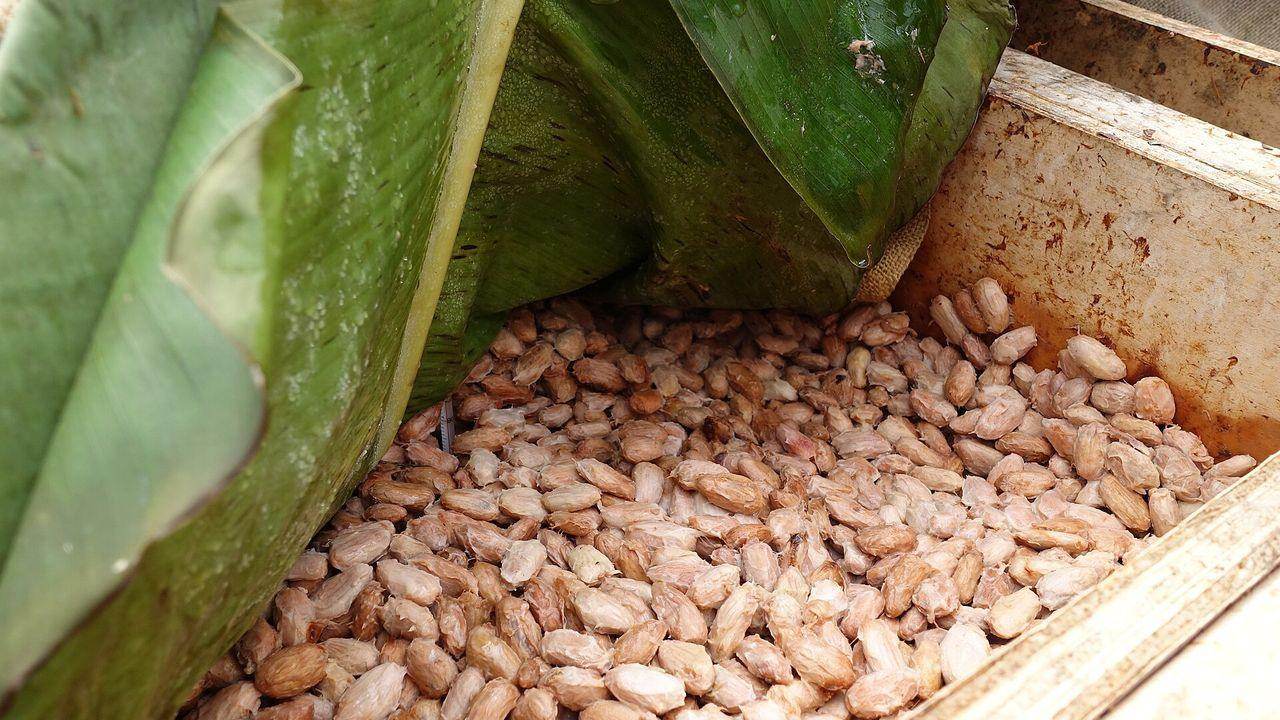
Fake platforms operating under the name of an “international agricultural exchange” are not uncommon. Their common trait: they use real commodity names (cocoa, coffee, grains and oils) as the nominal underlying while the actual business is a capital pool scheme. All eight checkpoints below can be verified with public information.
Checkpoint 1: Domain age
Query the domain registration date via WHOIS. An exchange claiming “years of establishment” and “global service” whose domain was registered less than a year ago is self-contradictory. Pay particular attention to one-year registration terms and fully hidden registrant information.
Checkpoint 2: Can the regulatory licence be verified?
Genuine licences can be found on the regulator’s own website. US FinCEN MSB registrations are searchable in the FinCEN MSB Registrant Search; UK FCA authorisations in the Financial Services Register; Singapore MAS licences on the MAS website.
The key tell: if the licence’s issue date precedes the domain registration date, it is almost certainly forged — the company did not exist when the licence was supposedly issued.
Checkpoint 3: Payment channels
Compliant exchanges move funds through bank accounts subject to anti-money-laundering supervision. If all deposits and withdrawals run through on-chain USDT addresses or UIDs with no bank third-party custody arrangement whatsoever, that is an extremely dangerous signal.
Checkpoint 4: Are there multi-level referral commissions?
If the platform builds in “invite codes, teams, communities, downline volume, differential rebates, commission tiers”, and advancement requires staking a platform coin and meeting downline trading volume targets, then its revenue comes from recruiting people, not from trading. Such structures are illegal pyramid schemes under the laws of many countries.
Checkpoint 5: Where does the client come from?
Legitimate trading platforms distribute their clients only through official app stores or their own website. If a platform asks you to download an APK or EXE from an unfamiliar bare IP address, or requires installing an iOS configuration profile (mobileconfig) to bypass the App Store, or its download server also hosts installation packages of other well-known exchanges — that is one of the most dangerous signals, typically accompanied by theft of seed phrases or private keys.
Checkpoint 6: Is there a contract specification page?
Any genuine commodity exchange puts the contract parameters on its homepage above the fold: contract size, price quotation unit, minimum tick, delivery months, delivery method, margin ratio, and fee schedule. If an “exchange” website has no contract specifications, no market data page and no fee schedule — only marketing copy and a download button — it is not an exchange.
Checkpoint 7: Are address and contact details consistent?
Check whether the footer address, the address in page metadata, and the entity behind the email domain all agree. Fake platforms often reuse multiple templates and end up with contradictory city addresses on the same site. An email domain that does not match the brand name is also a common tell.
Checkpoint 8: Do the advertised figures have a methodology?
“1.6k success cases”, “12k customers”, “100% positive reviews” — figures with no statistical methodology, no time range and no third-party source are meaningless marketing. Genuine operating data should be able to state how and over what period it was measured.
One simple principle
Ask for something verifiable. For a chain address, ask for the block explorer link. For a licence, the regulator’s reference number. For a warehouse, the address and stock audit report. For a settlement account, the bank name and account type. Anything that can only be provided as a screenshot, a PDF or “internal material” is not verification.
Genuine trading platforms are happy for you to check, because verifiability is their competitive advantage. Fake platforms avoid verification with various excuses — and that avoidance is itself the clearest answer.

Key Figures
- Domain age
- Checkable via WHOIS
- Licence verification
- Regulator website
- Payment channel
- Should be bank custody
- Client source
- Official channels
Want to know more?
Our team can provide detailed materials on cocoa bean spot, forward and warehouse receipt financing.